Buying a used bike or scooter in India: inspection, RC transfer and safe meet-up checklist (2026)
November 10, 2026· 7 min read · by the TBuddy team
A used bike or scooter can save you a lot of money — if you check the right things before you pay. This checklist walks you through what to verify online, what to inspect in person, which papers you need, and how to pay without getting caught by common scams. Rules and fees vary by state, so always confirm the final steps with your local RTO or the official Parivahan portal.
1. Check the registration before you visit
Ask the seller for the registration number and look it up on the official Parivahan / Vahan services. Make sure the owner name, model, fuel type and registration date match what the seller told you. If details don't match, or the seller refuses to share the number, walk away.
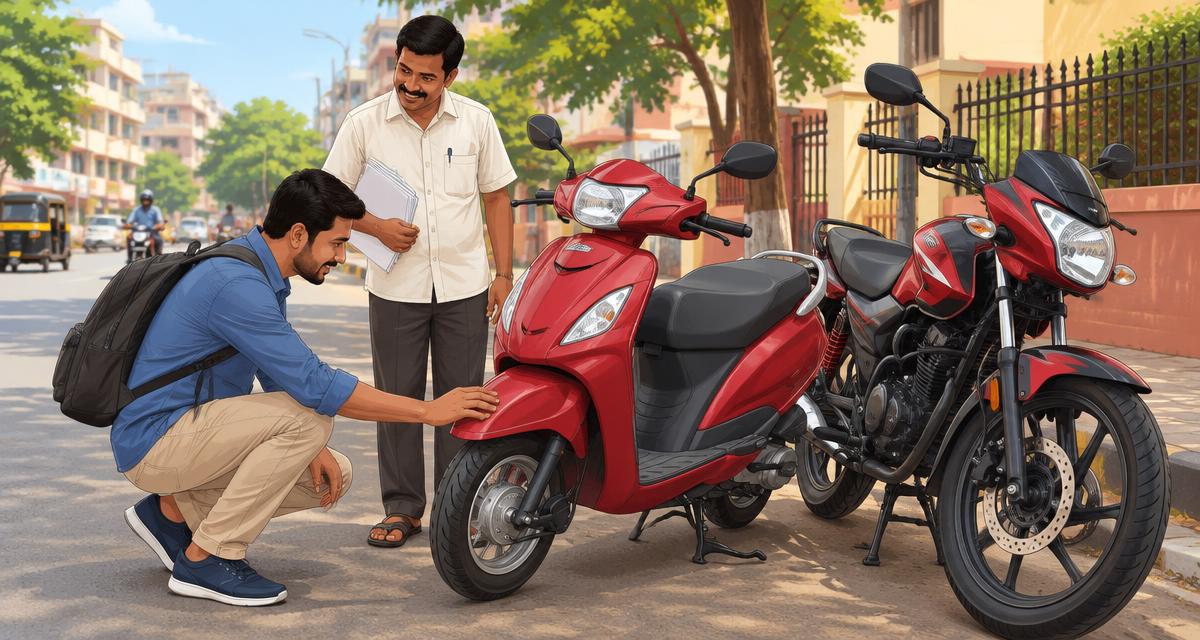
2. Inspect it in person — engine cold
- Ask the seller not to start the vehicle before you arrive. A cold start shows real starting problems.
- Listen for knocking or rattling, and look for blue or thick white smoke from the exhaust.
- Check tyres, brakes, chain and sprockets, suspension leaks and lights.
- Look for rust, cracks or welding marks on the frame, and dents hidden by fresh paint.
- Match the chassis and engine numbers on the vehicle with the RC.
- Compare odometer reading with service records — very low kilometres on an old vehicle is a warning sign.
3. Test ride safely
Meet in a busy public place in daylight, ideally with a friend. Carry your own helmet and driving licence. Test acceleration, braking, gear shifts and steering at low and medium speeds. Never hand over your phone, ID or cash as a 'deposit' for a test ride.
4. Get the right paperwork
- Original RC (registration certificate) and valid insurance.
- Valid PUC (pollution under control) certificate.
- Ownership transfer forms — commonly Form 29 and Form 30 — signed by the seller.
- Bank NOC and loan closure letter if the vehicle was bought on a loan.
- NOC from the original RTO if the vehicle is registered in a different state.
- Service records and a signed sale letter with date, time, price and both parties' details.
Transfer ownership as soon as possible. Until the RC shows your name, the seller stays legally linked to the vehicle — which is risky for both of you.
5. Agree a fair price and pay safely
Compare similar listings in your city by year, kilometres and condition. Use inspection findings to negotiate honestly. Pay only after you have inspected the vehicle and received the signed papers, and prefer a traceable payment like UPI or bank transfer over large cash amounts.
6. Avoid common scams
- 'Army officer posted elsewhere' or 'courier delivery' stories asking for advance payment.
- Prices far below market value with pressure to pay quickly.
- Requests to scan a QR code to 'receive' money — scanning a QR only ever sends money.
- Sellers who refuse a physical inspection or a meeting in a public place.
How TBuddy helps
On TBuddy you can browse nearby two-wheeler listings in the Marketplace, check whether a seller is verified, read their reviews, and talk through in-app chat without sharing your phone number first. If something feels off, use report or block from the seller's profile.
Inspect first, papers second, payment last — in that order, every time.
Sources and further reading
Official references checked November 8, 2026. Local availability, fees and group rules can change.